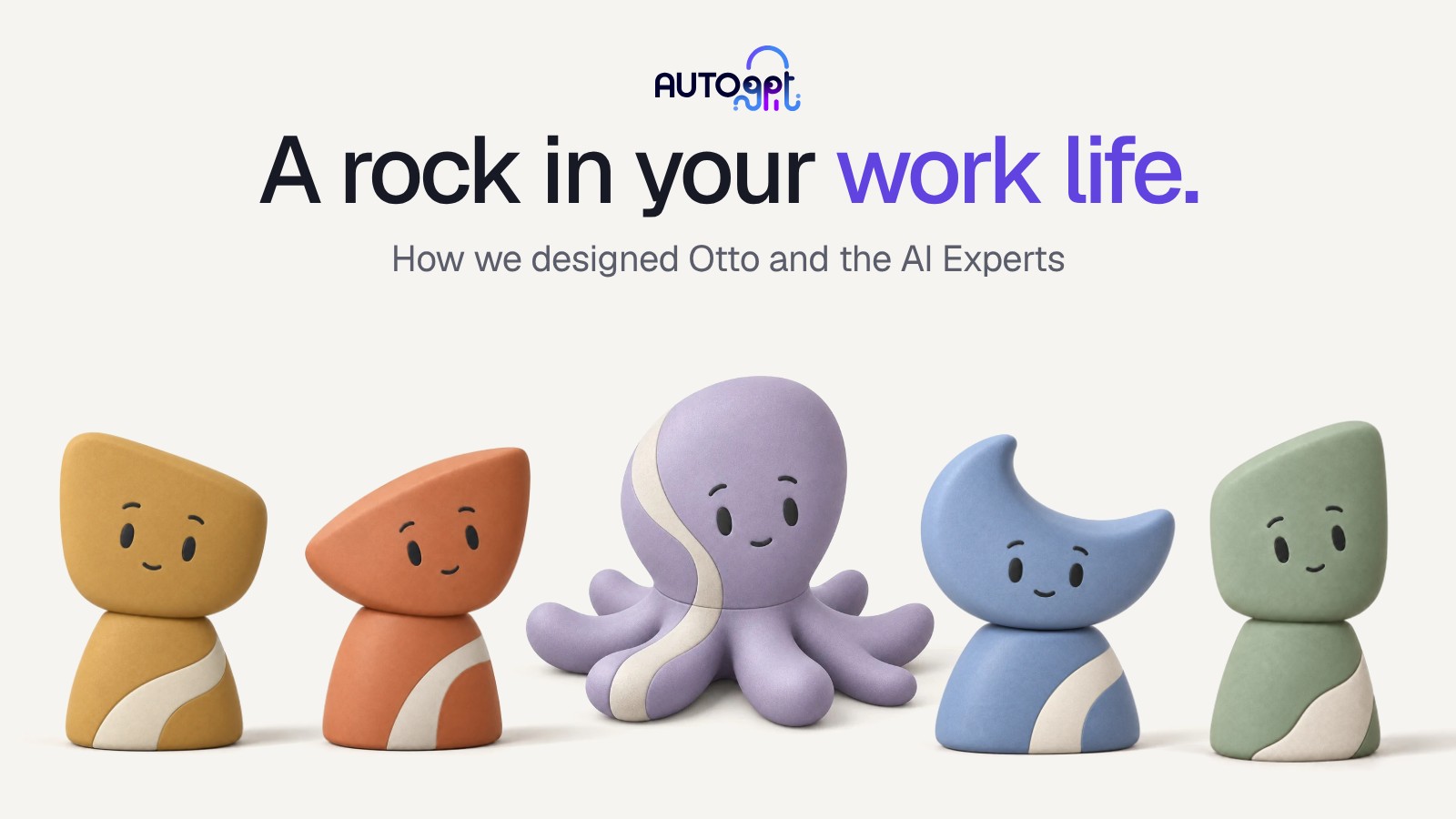
Every Expert you hire on AutoGPT now has its own face, one you can pick out at a glance. Otto, your Head of AI, is a lavender clay octopus. Maria, Max, Frankie and the rest of the roster are clay and rock figures, each in the mineral color of the work they do.
I’m John Ababseh, and I lead product at AutoGPT alongside Toran Bruce Richards, our CEO. These days a lot of roles blend together, and I’ve always been deeply passionate about branding, marketing, design and user experience. This post covers why our Experts needed characters at all, what we tried and threw away, why we landed on clay and rock, how the system works, and what it looks like when Maria does real work in the product.
The short version: when things get hard, you try to be a rock for the people you love. We want an Expert to feel like that in someone’s workday. It should be steady and warm, and it should be obvious that it’s AI.
Why our Experts needed a face
In September we moved AutoGPT from a directory of workflows to a team of Experts you hire. Maria handles marketing, Max handles sales, Frankie handles operations, and Otto runs the team as your Head of AI. Experts launched in production with release v0.8.0 on September 19, starting with a core roster of 18.
That raised something we had never decided: what an Expert should feel like. Our marketing site, our product and our emails each had a different feel. The Experts on our dev build were line drawings of people in tinted circles, made by an image model.
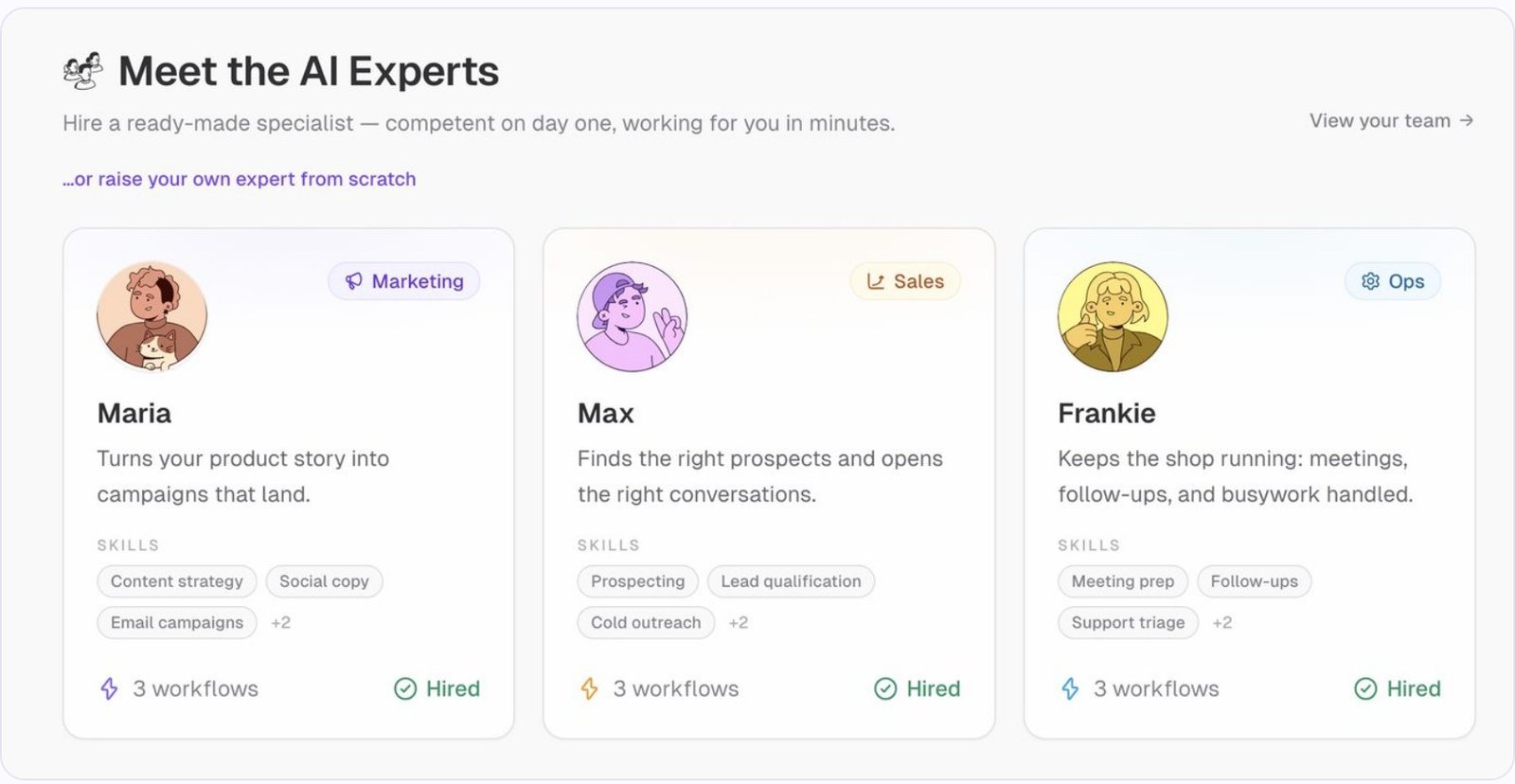
Those portraits had problems we couldn’t design around:
- They read as human. A woman holding a cat looks like a person, so every other screen then has to explain that she is AI.
- They had one expression. Maria looked the same whether she was working, waiting on you or stuck on a broken connection.
- They didn’t scale. Every Expert someone creates needs a new portrait, and an image model won’t give you a thousand portraits in one consistent style.
- They shared nothing with Otto. The email you opened and the product you logged into looked like two different companies.
A Team page is a roster, and a roster only works if you can scan it. Once you have Otto plus four or five Experts, you should find Frankie without reading a name. The xAI team put it well in Designing Grok Bot: people should recognize a Bot from its avatar “almost peripherally.”
So the character had three jobs: tell you who this is, show what they’re doing, and signal how much attention the work needs from you.
What we tried before clay
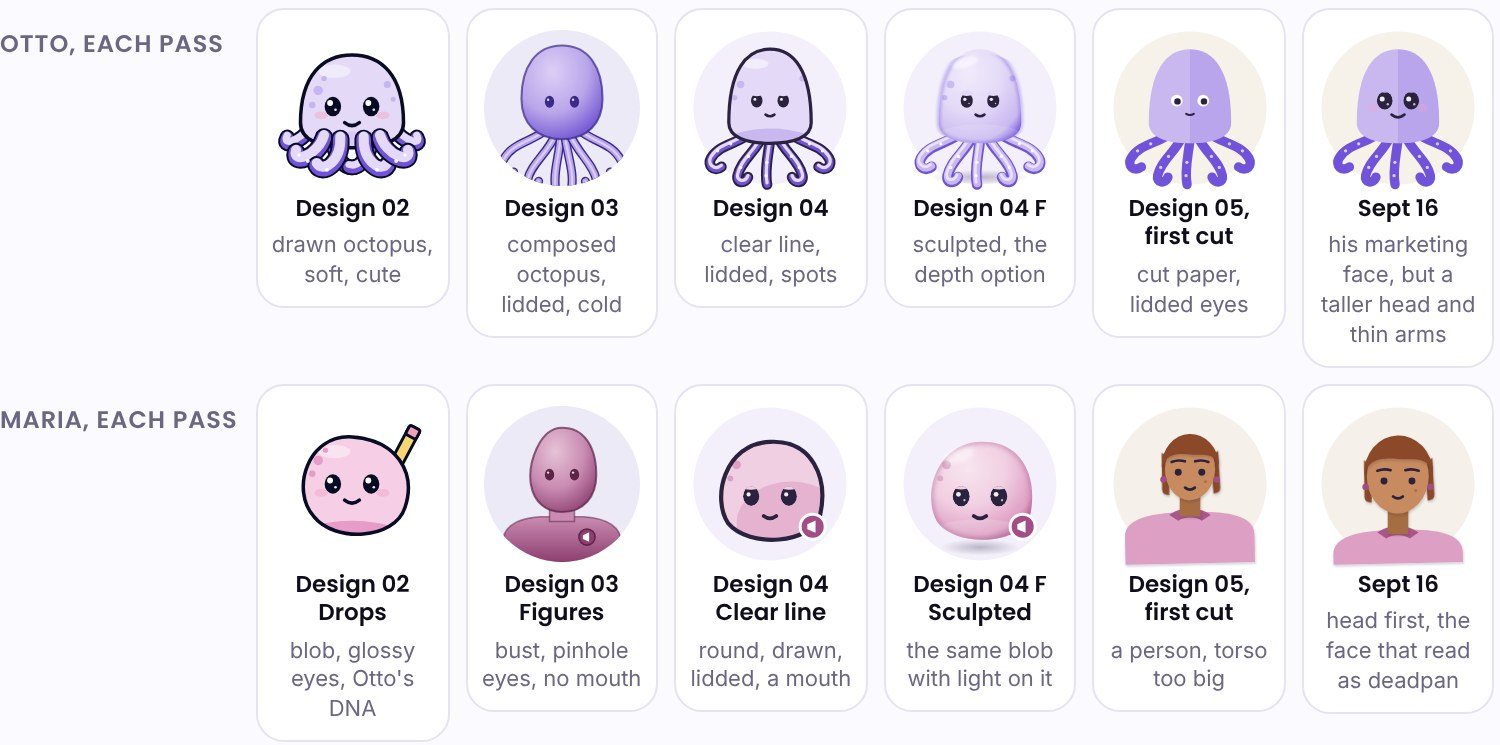
It took five rounds between August and mid-September, and we kept something from each one. I did most of the core design work, and feedback from the team along the way is what got it here.
Otto, August. Otto started as our marketing mascot, an octopus with big glossy eyes, cheeks and a wide smile. He was already in our emails. He also set the constraint: whatever the Experts became had to stand next to him and look like family.
Drops, September 4. Soft shapes that share Otto’s face, outline and spots. Shape, color and one accessory told you who each Expert was. Every avatar came from four parameters, so a new Expert got a consistent face instantly with no image model involved. I shared these early concepts with Abhi, one of our frontend engineers, and he liked the direction. When Toran and I reviewed it, the brief changed: less cute, built for trust, something we could own, and nothing that looked like Notion.
Composed figures, September 15. I pushed the other way, with calm person-shaped busts that are plainly not human, small faces and no smile by default. The research supported the move. People preferred less cute AI for knowledge work because cuteness lowered how competent it seemed (Lv et al., Tourism Management, 2022). They fixed the cute problem and over-corrected into mannequins, with egg-shaped heads and no mouths. The next pass went back to the balance I’d asked for.
Drawn Experts, September 16. Round characters with a single clear line, with references from Hergé to Japanese haniwa clay figures. Every version kept coming back as the same round character. I shared this third round with Nick, one of our engineers, and Toran. They felt the characters didn’t have much life to them and looked too static and basic. The one thing it added that we kept was a sculpted clay finish.
Drawn people and cut paper, September 16 and 17. I recommended cut paper, after Matisse’s late cut-outs. The team split. One engineer liked it a lot. Another didn’t trust any of the people and read the faces as haunted, like a support bot that never actually works. Clay had already shown up twice, as the sculpted finish and as a clay figurine in this round. That’s the thread Toran and I picked up next.
Here’s what those rounds taught us:
- Cute borrows trust from a famous name. Cute characters work for Meta’s Muse and xAI’s Grok Bot because a household name does the trust work. We’re asking business owners to hand over real work, so the character has to earn that trust on its own.
- Human-like raises the stakes. Customers who are already frustrated rate human-like chatbots lower, because the human look sets expectations the bot then misses (Crolic et al., Journal of Marketing, 2022). An Expert that fails a task shouldn’t look like a person who let you down.
- Color alone can’t carry identity at 24 px. Seven marketing Experts share one color, so the silhouette has to do the work.
- Simple shapes with expressive eyes are taken. Grok Bot owns that look, and Notion owns line-drawn people. We needed something nobody in our category had.
Why clay and rock
The direction came from sculpture that makes you feel something without a face. The three pieces on my inspiration board were all at the Guggenheim Bilbao:
- Eduardo Chillida’s How Profound Is the Air (1996), an alabaster block that makes the air and space inside it feel solid.
- Richard Serra’s The Matter of Time, steel you walk through, so the piece unfolds as you move around it.
- Ruth Asawa’s looped-wire forms, where inside and outside run into each other.
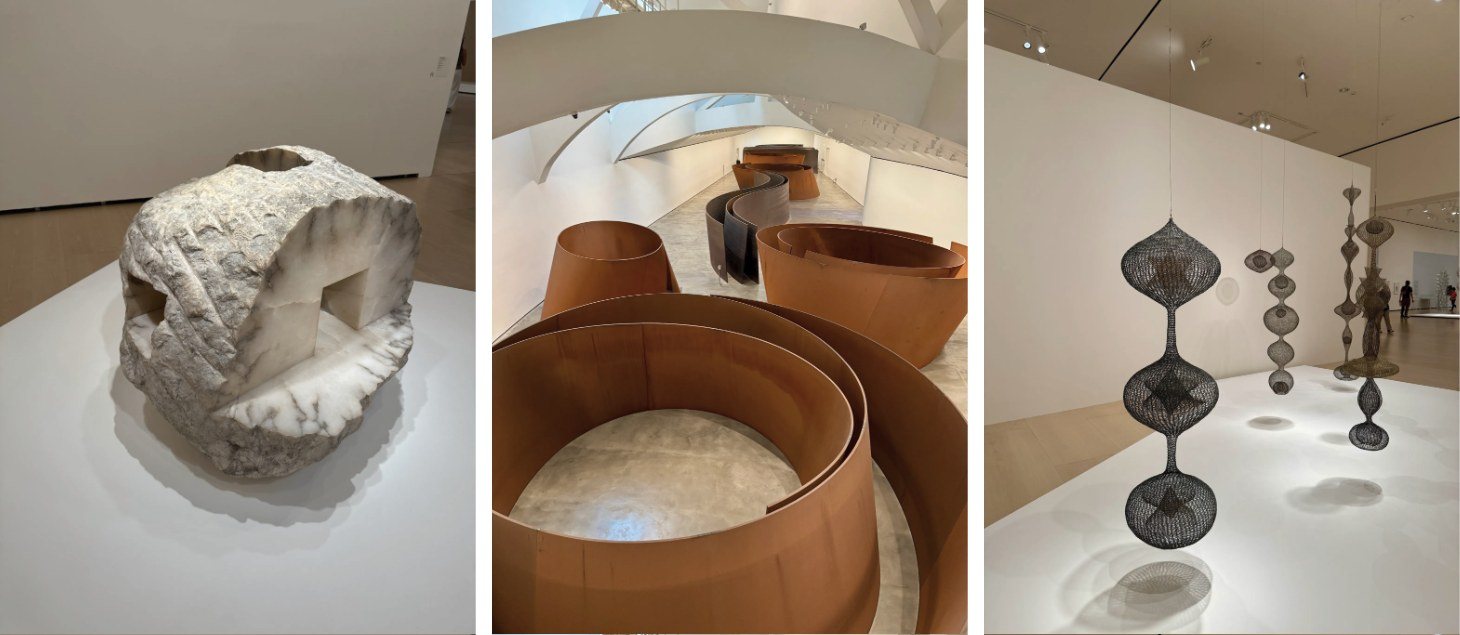
I took these photos on a visit to Bilbao, where I got to see all three in person. None of them has a face, and each one has real presence. Rocky from Project Hail Mary, a friend built like a rock, became our reference for the feeling.
That’s where the title of this post comes from. Your Experts work around the clock, and they aren’t alive or human. A rock is always there and isn’t alive either, and it still feels like something you’d want on your side.
Here’s why clay and rock works for us:
- It’s honest about being AI. Nobody mistakes a stone for a person, so the figure and the “AI Expert” label tell the same story.
- It’s warm without being cute. Clay is handmade and tactile, and the faces are small and calm, so the warmth comes from the material.
- It’s steady. A rock stays put. That shaped how the characters move, which I cover below.
- It’s physical. You could picture one sitting on your desk, and we’re already prototyping printed ones.
- It’s ours. Clay on its own is common. Two stacked irregular forms, a cream inlay with a real groove, mineral colors and one consistent lighting setup add up to a look we haven’t seen anyone else in our category use.
We started from soft relief, the shallow carving you see on stone, and refined it into a polished figure.
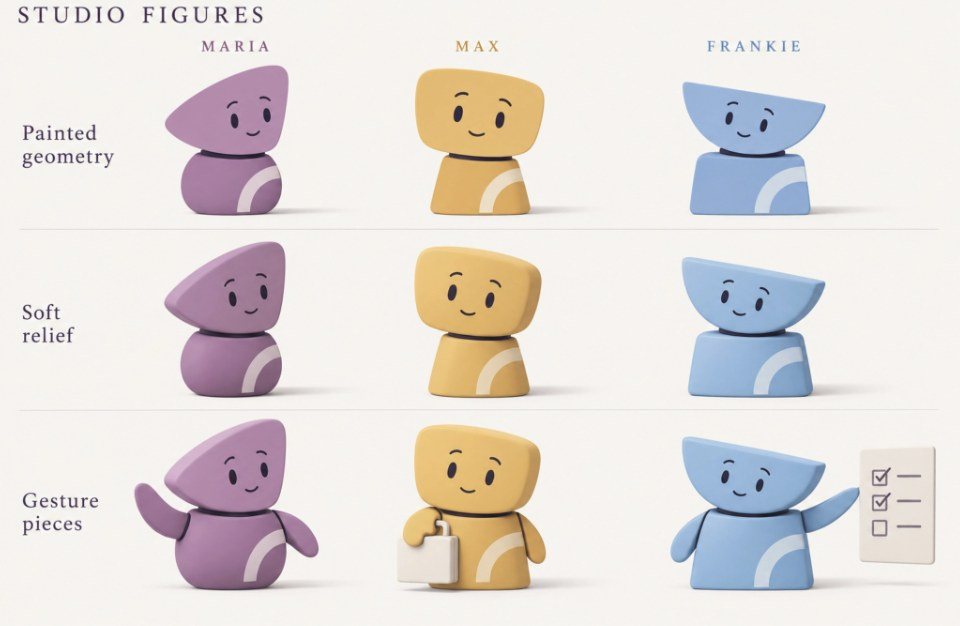
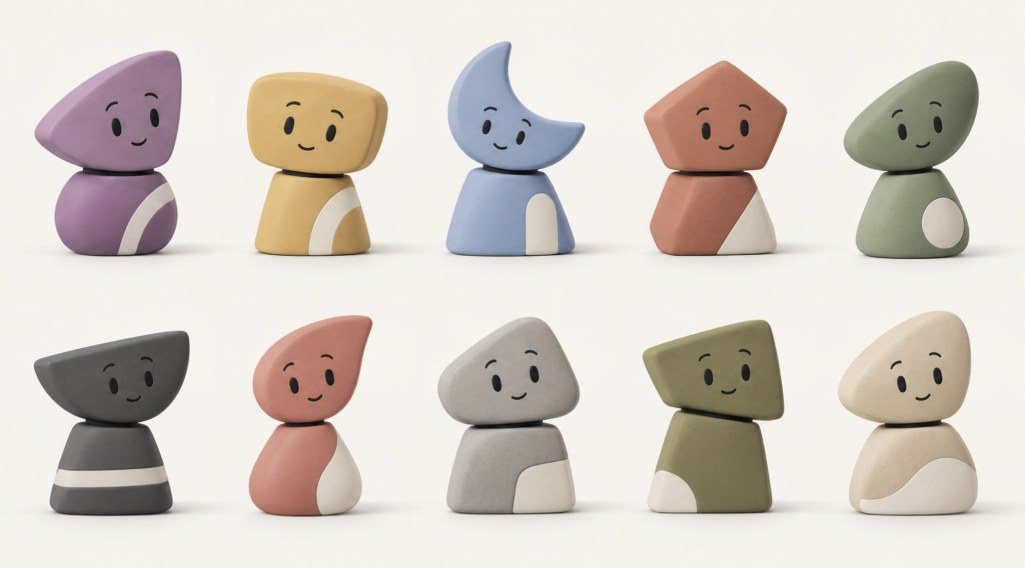
Toran gave that version the okay. When we saw the characters in our platform, Lluis, another of our engineers, noticed they looked too similar, and it was hard to tell them apart. Toran’s feedback was to make the shapes more 3D and closer to one of the original concept shapes, the pyramid. That helped expand the brand we agreed on.
One family, many individuals
Every character follows the same six rules, so the family stays recognizable as it grows:
- One main color. A single mineral color per figure, so the kind of work reads at a glance.
- One shape resting on another. A head on a compact base with no limbs, so nobody mistakes an Expert for a person.
- Irregular forms. Soft, slightly asymmetric stones, so each figure gets its own silhouette.
- Smooth clay and rock. A soft, low-sheen finish that feels handmade and calm.
- A small flowing cream inlay. Always on the lower stone and never on the head. Otto is the one exception.
- A visible material join. The cream sits in a real groove, so it reads as part of the stone.
Otto is the one octopus. He’s your Head of AI, a lavender clay octopus with a rounded mantle above eight arms. Lavender, purple and plum belong to him alone, so no Expert in our library is purple.
Every Expert is two stones and a seam. A larger head rests on a compact base, and a small cream inlay runs along a groove in the lower stone. The face is small and charcoal, with two eyes, relaxed brows and a quiet mouth.
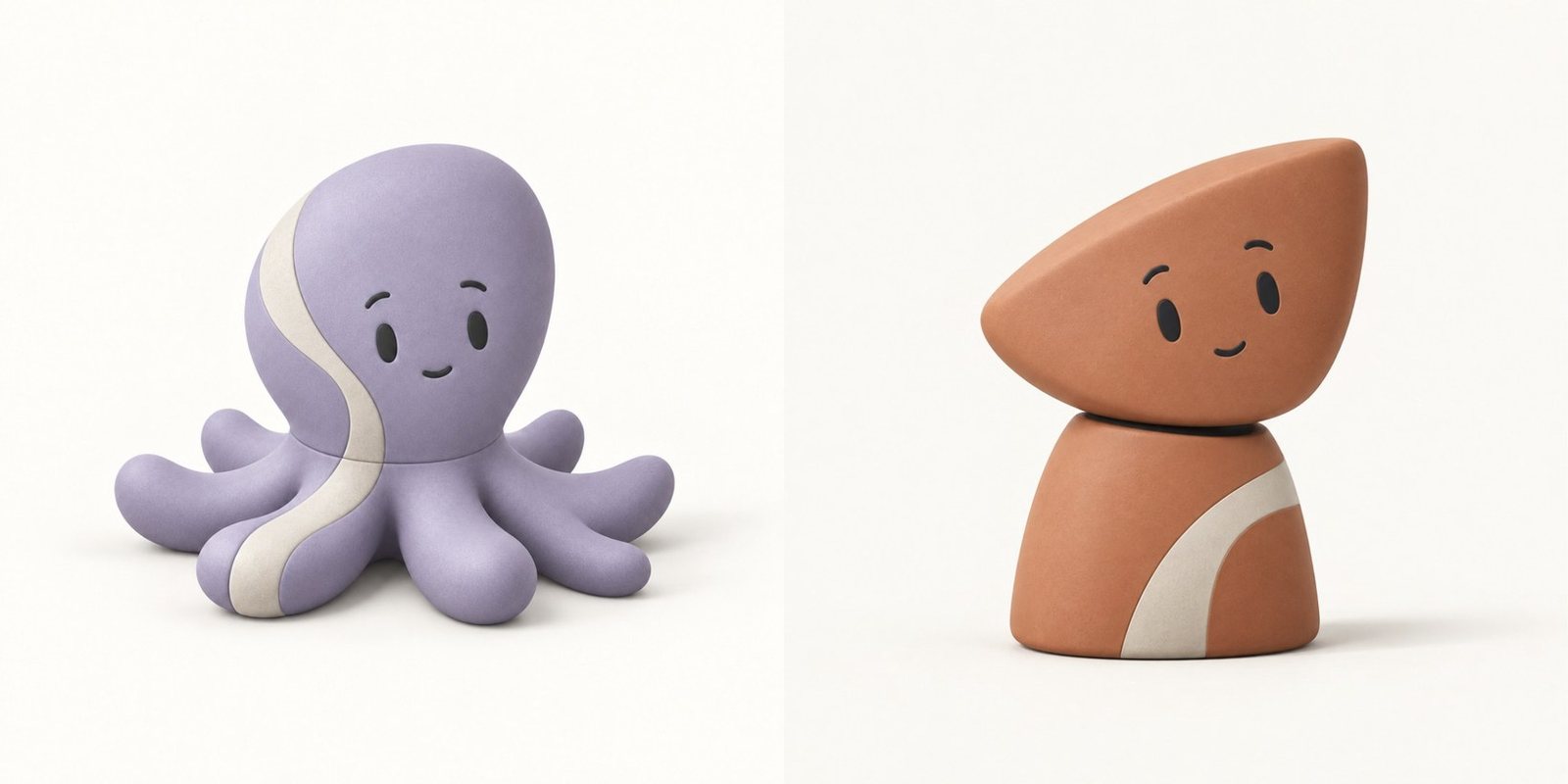


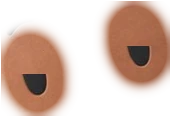
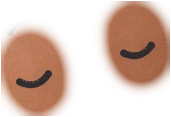
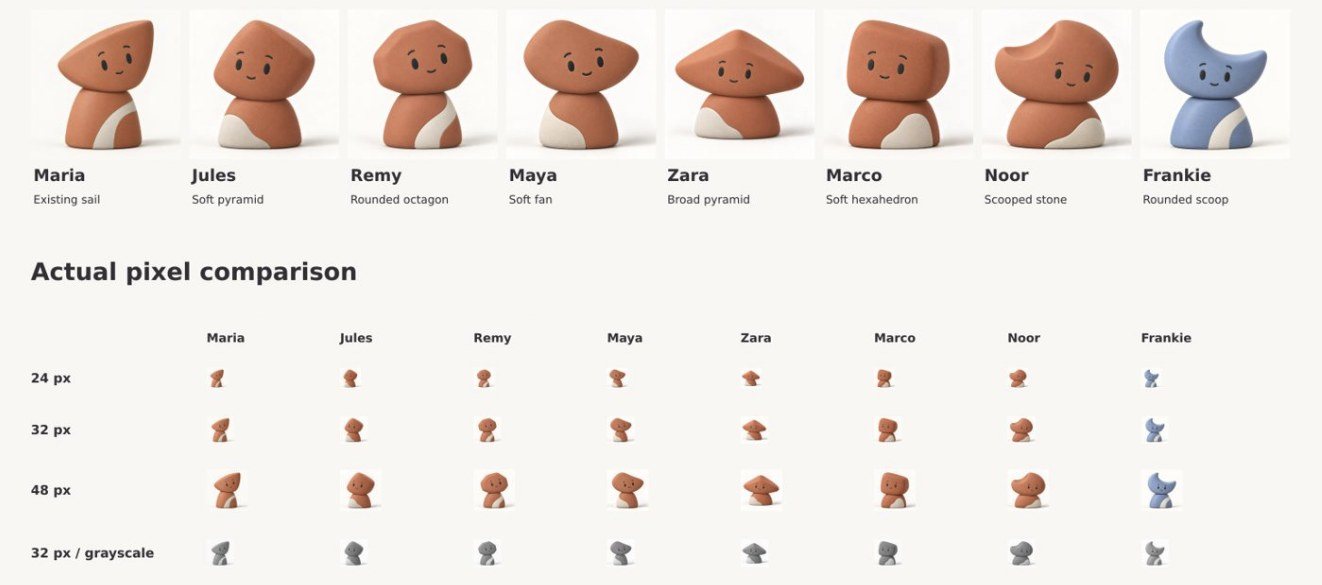
Color tells you the kind of work. Each category has one mineral color, and every Expert in that category shares it.
| Category | Clay color | Experts in our library |
|---|---|---|
| Marketing | Terracotta | Maria, Jules, Remy, Maya, Zara, Marco, Noor |
| Sales | Ochre | Max, Jordan, Anika, Omar |
| Finance | Sage | Mina, Theo, Daniel |
| Support | Muted coral | Riley, Robin, Sasha, Kai |
| Operations | Slate blue | Frankie, Harper, Vera, Ellis, Sofia, James, Ines, Lena |
| Research | Olive | Nadia, Quinn, Priya |
| Development | Charcoal | Devon, Alex, Casey |
| Content | Muted teal | Saved for the next Content Experts |
| No category yet | Warm stone | A custom Expert before you pick a category |
| Head of AI | Lavender | Otto only |
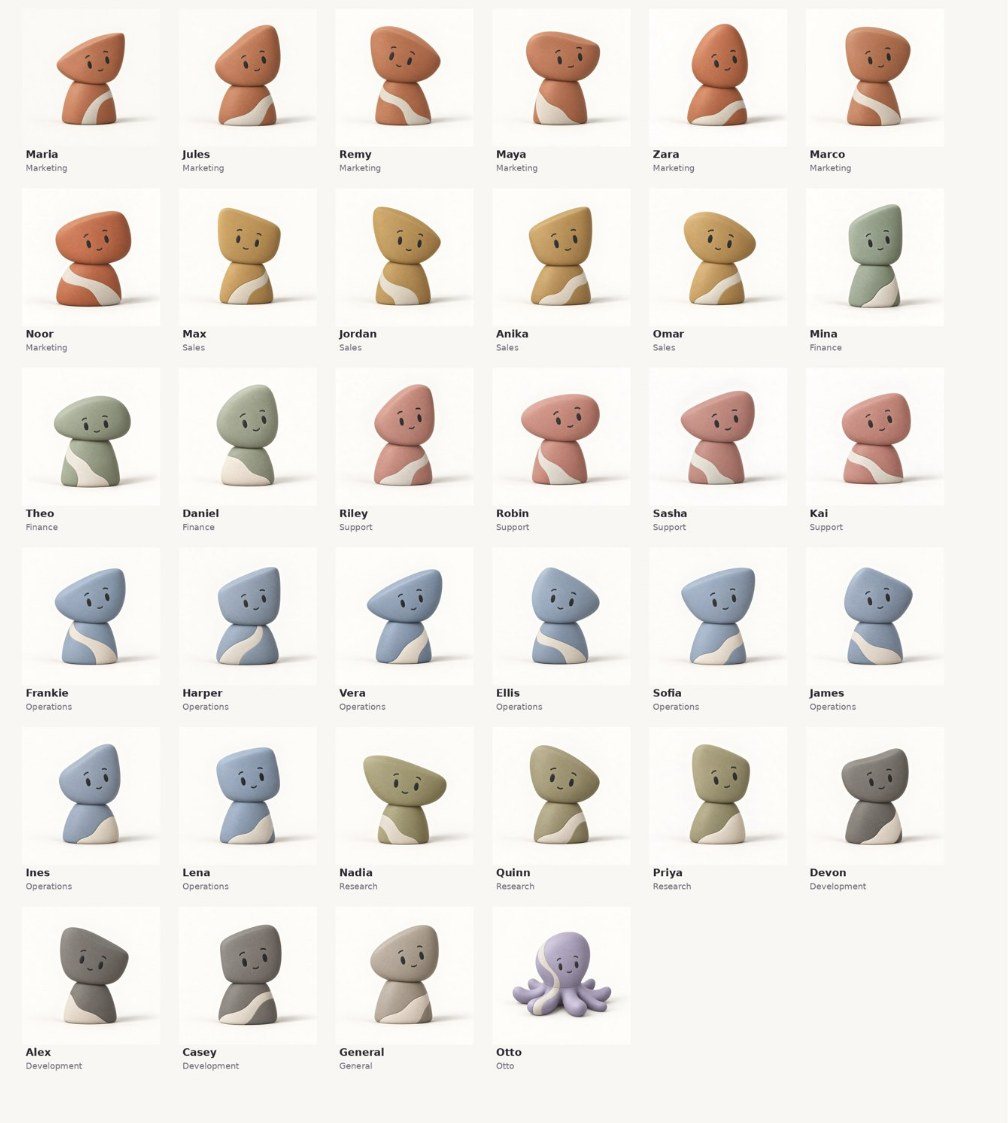
Shape tells you who. Color can’t separate seven marketing Experts, so each one gets its own head shape and its own cream path. Zara is a broad pyramid, Marco a soft hexahedron and Noor a scooped stone, all in the same terracotta as Maria.
We test every size. Each figure is checked at 24, 32, 48 and 96 pixels, in color and in grayscale. At 24 px the name always sits beside the avatar and the silhouette does most of the recognizing.
Your Expert keeps its face. Once you hire or create an Expert, its look is saved. Our rule is that renaming Maria, adding a skill or moving her to another category never changes her face. A new look is something you choose on purpose, with a preview first.
The family can grow. A new category gets its own muted mineral color and a reference render, and every new member follows the same six rules.
Calm by design
One rule sits under the whole system. The character handles recognition and approachability, and the interface carries capability, progress, permissions, cost and recovery. A friendly face never stands in for proof that a task worked.
That’s why our characters barely move. The drawn versions blinked, breathed, glanced around, hopped when they needed you and drooped when something failed. With clay we took almost all of that out. The system allows one recurring motion, a blink of about 140 milliseconds: once after you interact, then every 12 to 18 seconds while an Expert is active, and none after 30 seconds of quiet. The figures on this page follow the same rule, so hover over one and it will blink back.
The system defines nine expressions, and each one maps to a real state with words and a next step beside it. The face backs up the status, and the words carry it.
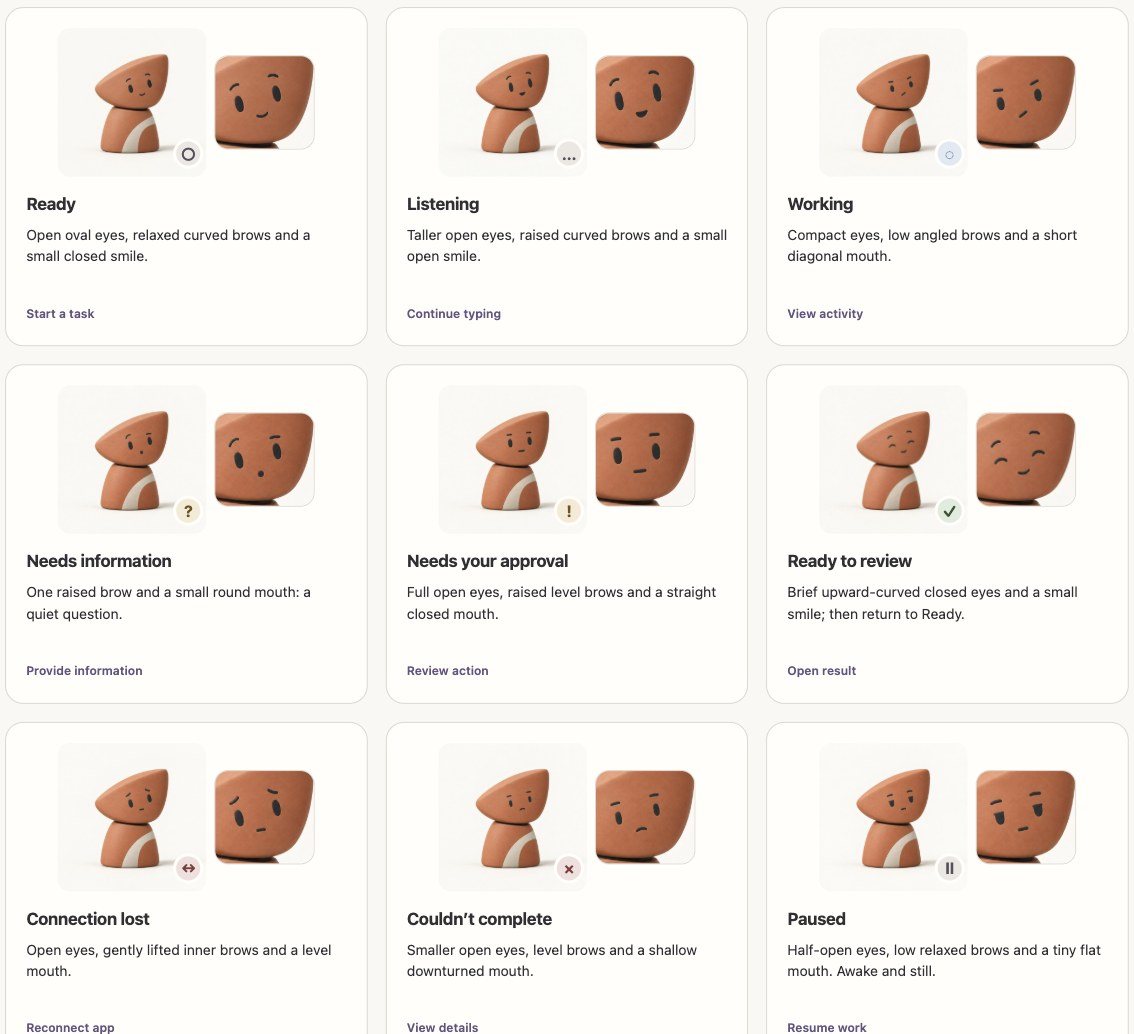
| State | What you see | Your next step |
|---|---|---|
| Ready | Nothing is running, plus one useful task to try | Start a task |
| Listening | Only while you’re giving the Expert input | Keep going |
| Working | The real current step and when it last updated, never a made-up percent | View activity |
| Needs information | The specific thing that’s missing, like a keyword or an audience | Provide it |
| Needs your approval | The exact action, where it’s going and what it says | Review the action |
| Ready to review | The saved result, by name | Open the result |
| Connection lost | Which app disconnected and what work it affects | Reconnect the app |
| Couldn’t complete | The known cause, with any partial result kept | View details |
| Paused | Who paused it and what resuming will do | Resume work |
When work needs you, the face stays still and the reason is spelled out. We never use a hop to nag you or a sad face to ask for sympathy, and nothing animates around a failure or a payment.
“Ready to review” and “Needs your approval” are different on purpose. A finished draft is ready for you to read, and it hasn’t been sent or published. Approval only shows up when a real action, like sending an email, is waiting on you.
An Expert also never “goes to sleep.” If work is paused, we tell you who paused it and what happens when it resumes.
Real work with Maria
The real test of a character is whether it holds up next to real work, so here’s an actual task, start to finish in our production app. I asked Maria to write the search engine optimization (SEO) brief for this post. She’s our SEO Content Manager.
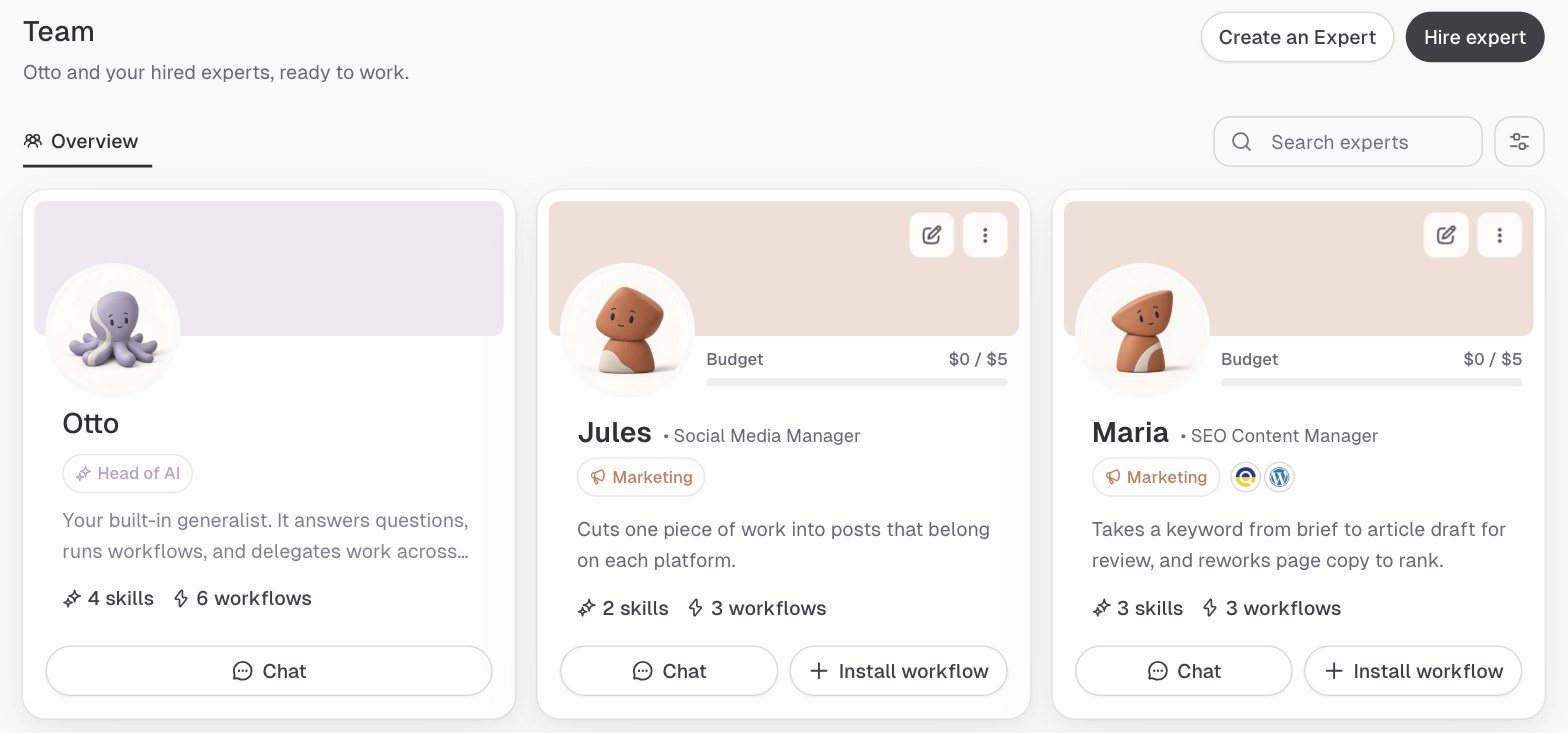
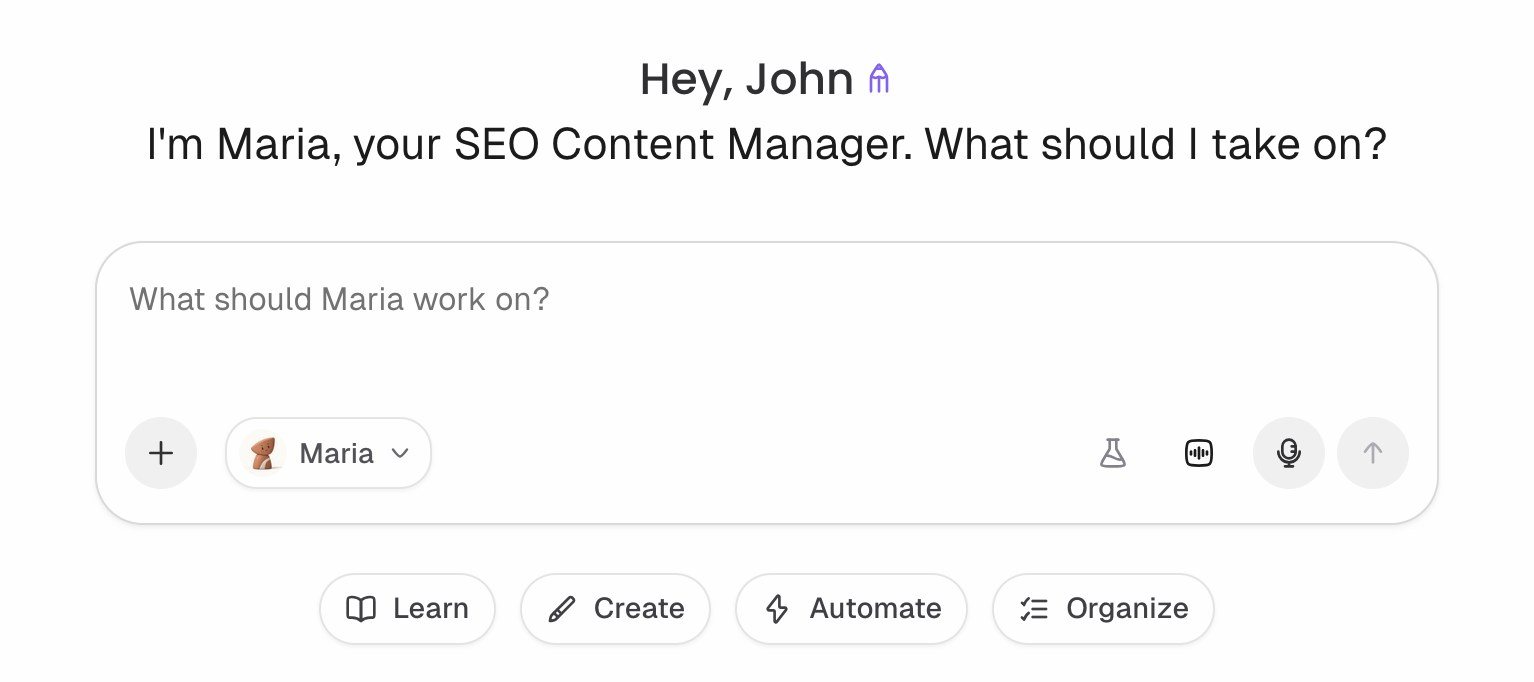
I asked for a primary keyword with two variants labeled as hypotheses, the reader intent, a title tag, a meta description, a URL, an outline, alt text for six images and three pages to link to. I also told her not to invent search data and to keep everything as a draft.
Here’s what she did:
- Loaded her SEO content brief skill.
- Read agpt.co and our blog to match how we name URLs and which pages exist.
- Counted the characters in her title tag, meta description and alt text with a short script before writing anything down.
- Saved the brief as a Markdown file for me to review, and said nothing was published or sent.
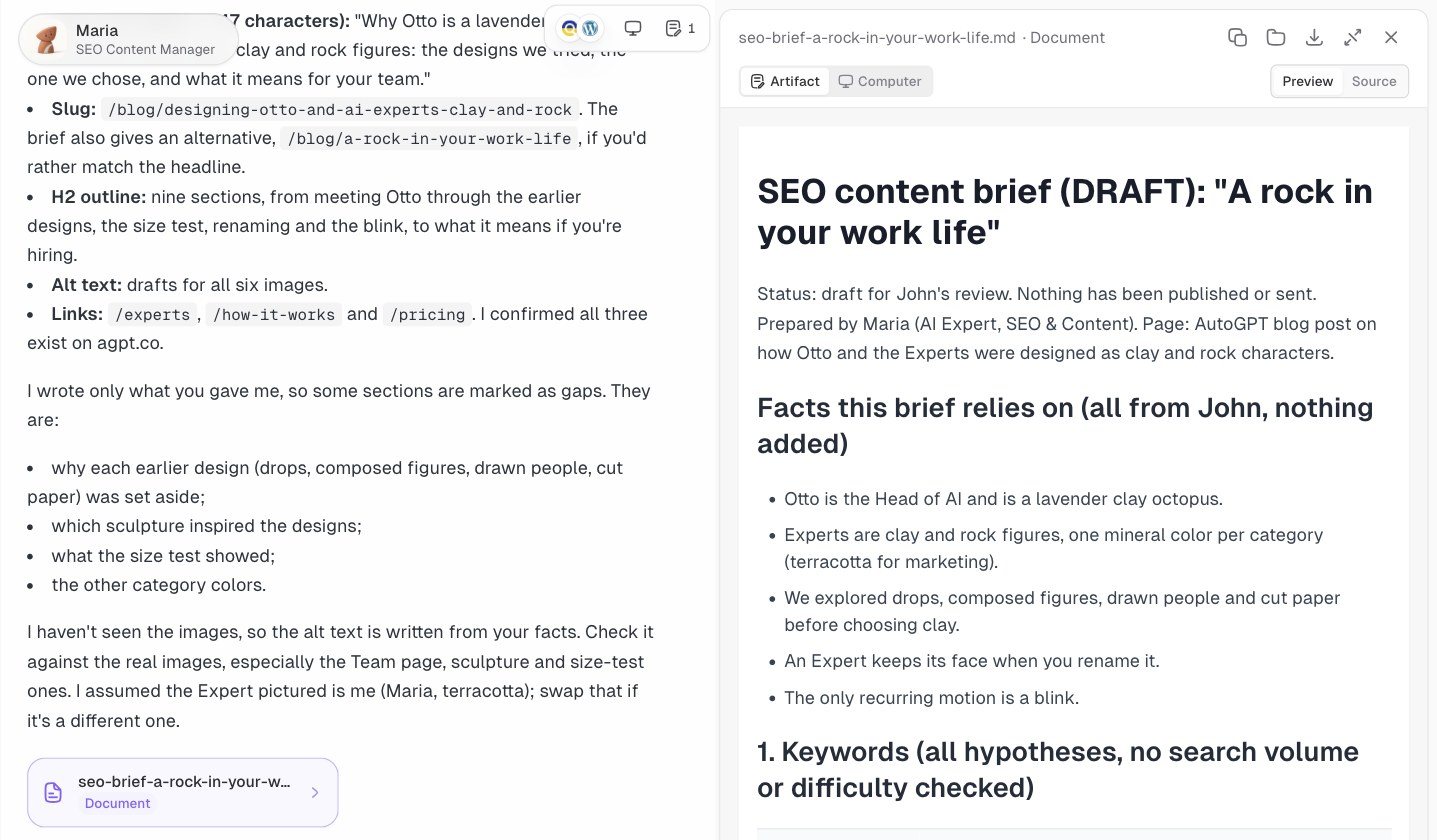
| What I asked for | Maria’s draft |
|---|---|
| Title tag | Designing Otto and AI Experts as Clay and Rock | AutoGPT (56 characters) |
| Meta description | Why Otto is a lavender clay octopus and Experts are clay and rock figures: the designs we tried, the one we chose, and what it means for your team. (147 characters) |
| URL | /blog/designing-otto-and-ai-experts-clay-and-rock |
| Keywords | AI character design, hire AI Experts, AI product design (all labeled as untested hypotheses) |
The part I liked most was her list of open items. She flagged the gaps for me to fill: the reasons we set aside each earlier direction, the name of the sculpture, the result of the size test and the other category colors. Those gaps are what this post answers.
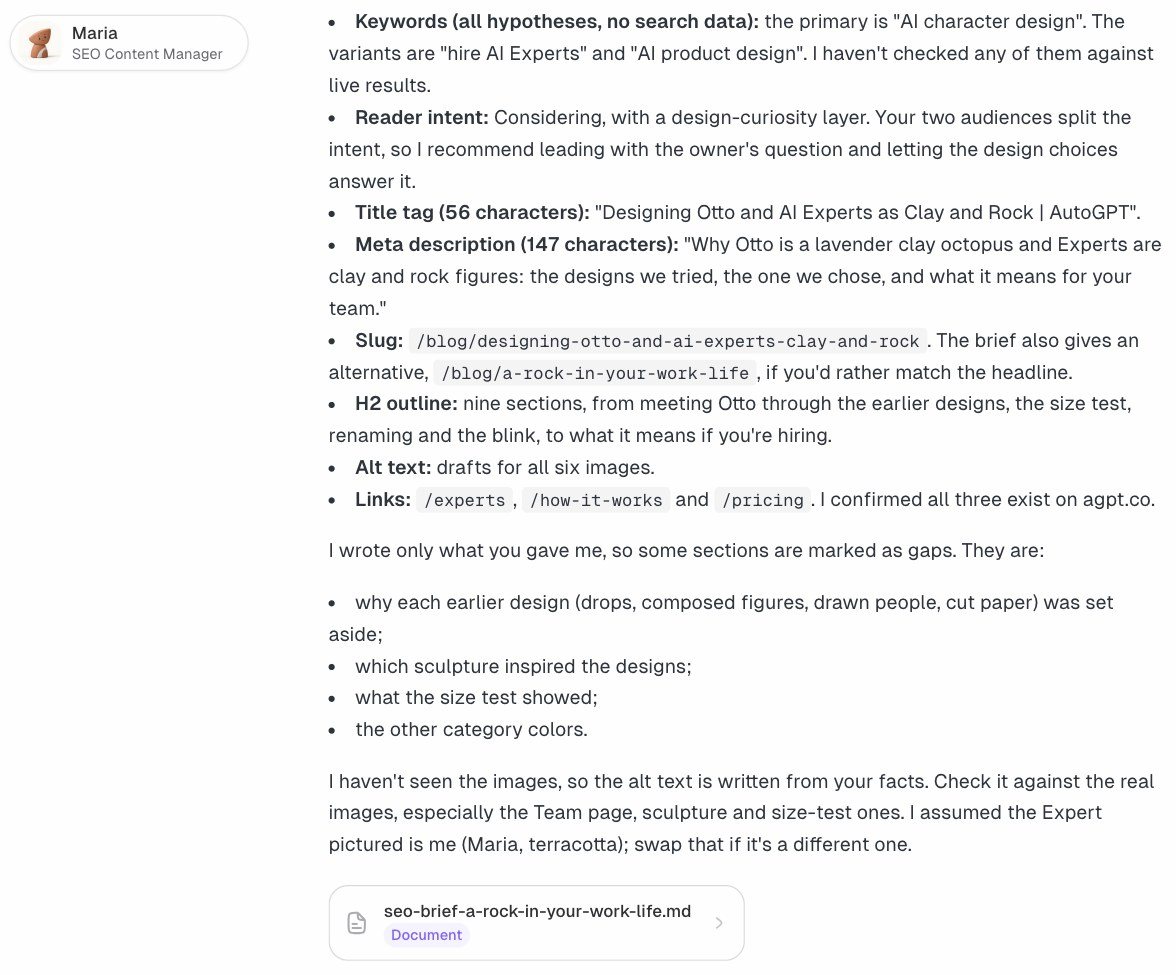
We ran a version of this test on September 21, before the clay identity shipped. Today Maria shows up as clay across the app, and she behaved the way the character promises: clear about what was done and about what still needs me.

Put Maria on your next brief
Hire Maria, or any of our 32 Experts, and see what comes back.
What comes next
The characters are live in the product and on agpt.co today. Here’s where they go from here.
- New Experts. Our library has 32 Experts across seven categories, and every new one follows the same six rules. Content Experts get muted teal when they arrive.
- Our emails. Next, the clay characters move into our emails, so the Otto in your inbox matches the one you work with in the app.
- Figures you can hold. We’re prototyping printed figures from the same rules. The underside stays the body color and carries one AutoGPT mark. We’ll give them out at GitHub Universe in San Francisco on October 28 and 29. GitHub invited a small group of open source projects, AutoGPT among them, to showcase their work, meet existing and prospective users, and connect with the wider GitHub community.
You can meet all of them at agpt.co/experts, and see the family in motion at the end of our launch film.
A week or two after someone becomes a customer, I email them to ask what they want off their plate. So I’ll ask you too: what would you hand off first?



Meet your team of AI Experts
Otto and 32 Experts are ready to take work off your plate.
Start free for 7 daysMeet the Experts